
Track 1: Advances in Discovery, Formulation, and Delivery of New Modalities
Category: Poster Abstract
Holly Coleman, MS (she/her/hers)
Graduate research assistant
University of Colorado Boulder
Boulder, Colorado, United States
Holly Coleman, MS (she/her/hers)
Graduate research assistant
University of Colorado Boulder
Boulder, Colorado, United States
Robert L. Garcea
University of ColoradoBoulder
Boulder, Colorado, United States
Joel L. Kaar
University of Colorado Boulder
Boulder, Colorado, United States
Daniel K. Schwartz
University of Colorado Boulder
Boulder, Colorado, United States
Theodore W. Randolph
University of Colorado Boulder
Boulder, Colorado, United States
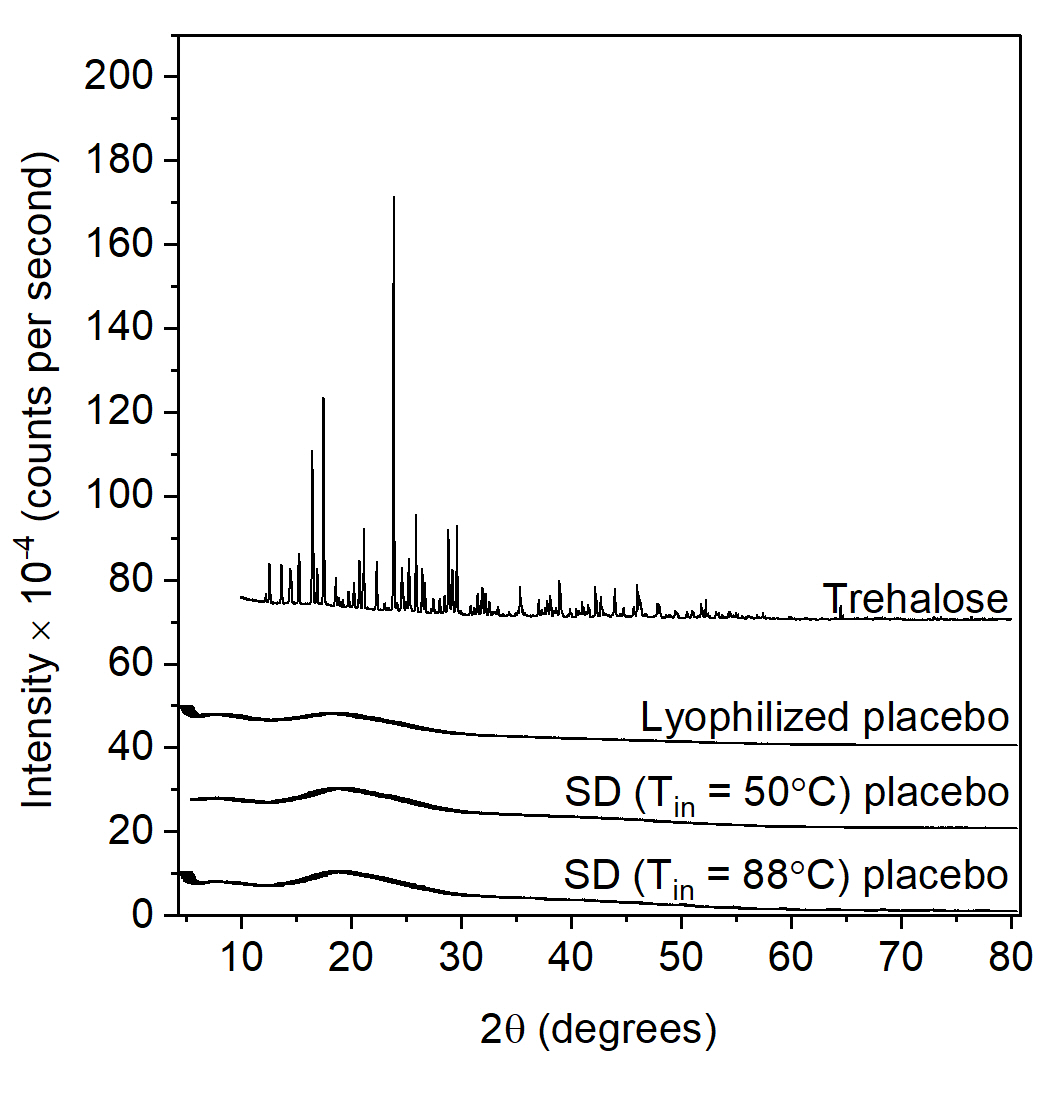 XRD spectra of spray-dried and lyophilized placebo samples and unprocessed trehalose. Unprocessed trehalose (n = 1 scan) is highly crystalline and shows agreement with the literature for characteristic peaks of trehalose dihydrate. Spray-dried (SD) placebo powder, using heated air at an inlet temperature (Tin) of 88 or 50 °C, and lyophilized placebo cakes (n = 2 – 4 scans) were highly amorphous.
 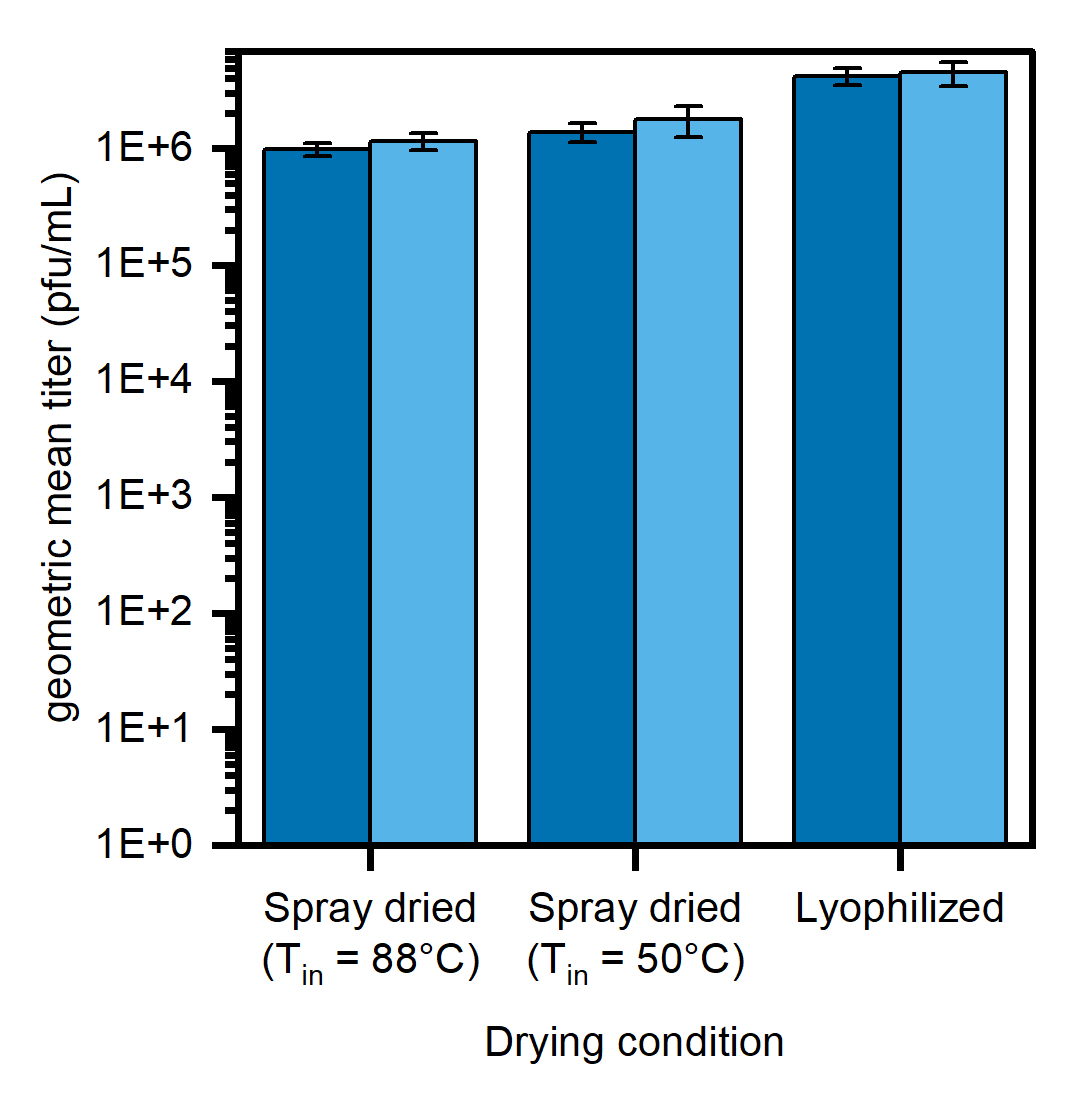 Titer of BV in liquid formulations prior to drying (dark bluebars) and in reconstituted lyophilized or spray-dried formulations (lightblue bars). No loss of titer occurred during spray-drying BV at drying gas inlet temperatures of 88 °C (n = 7) or 50 °C (n = 3) or lyophilization (n = 3).
 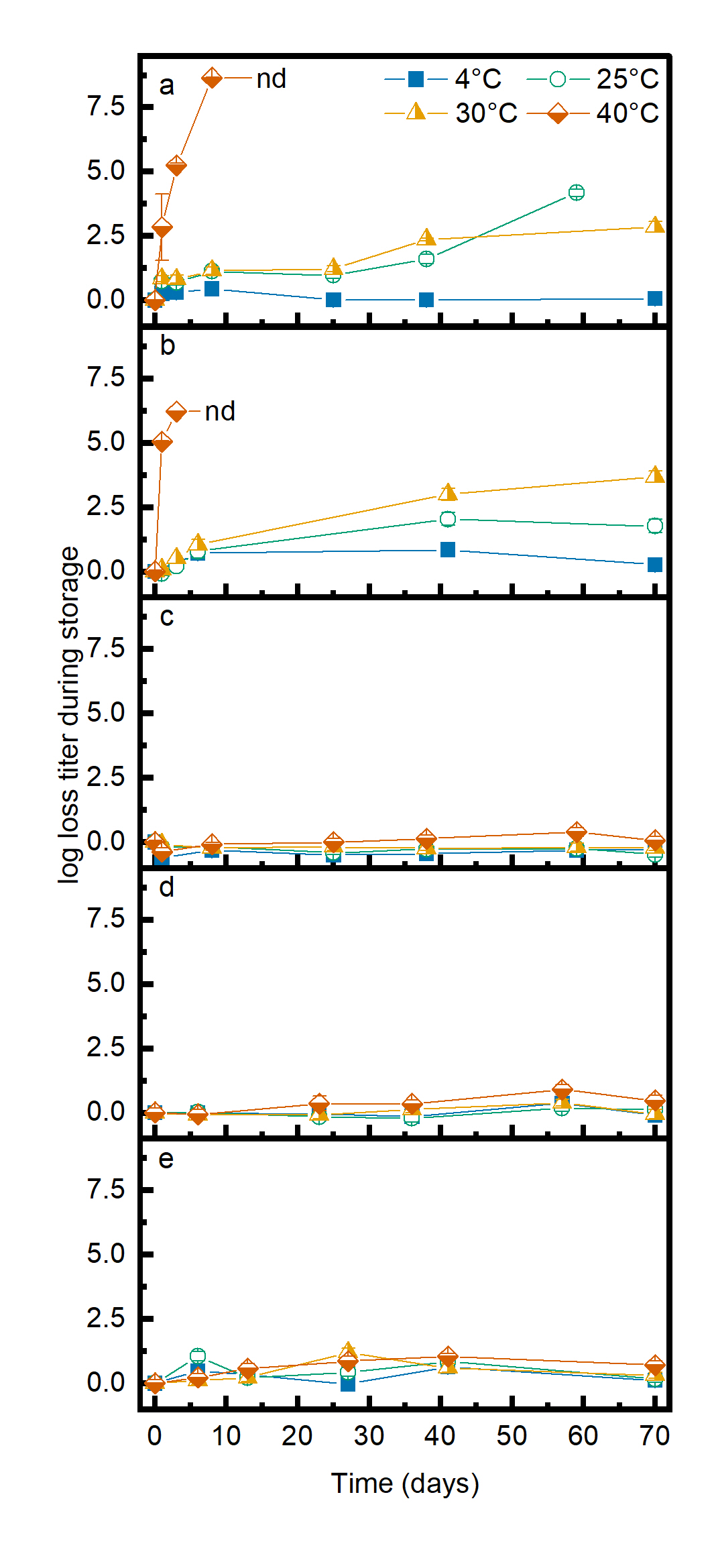 Log loss titers for BV during storage in liquid, spray-dried powders, and lyophilized cakes. BV was incubated at 4 °C (blue squares), 25 °C (green circles), 30 °C (orange triangles) or 40 °C (red diamonds) as supplied (viral stock, a), after formulation (b), after spray-drying at a Tin of 88 °C (c) or 50 °C (d), and after lyophilization (e). Spray-dried and lyophilized BV show enhanced storage stability at 25 °C and above compared to liquid stock and formulated BV (n = 3). nd = not determined due to titer below detection limit of assay.